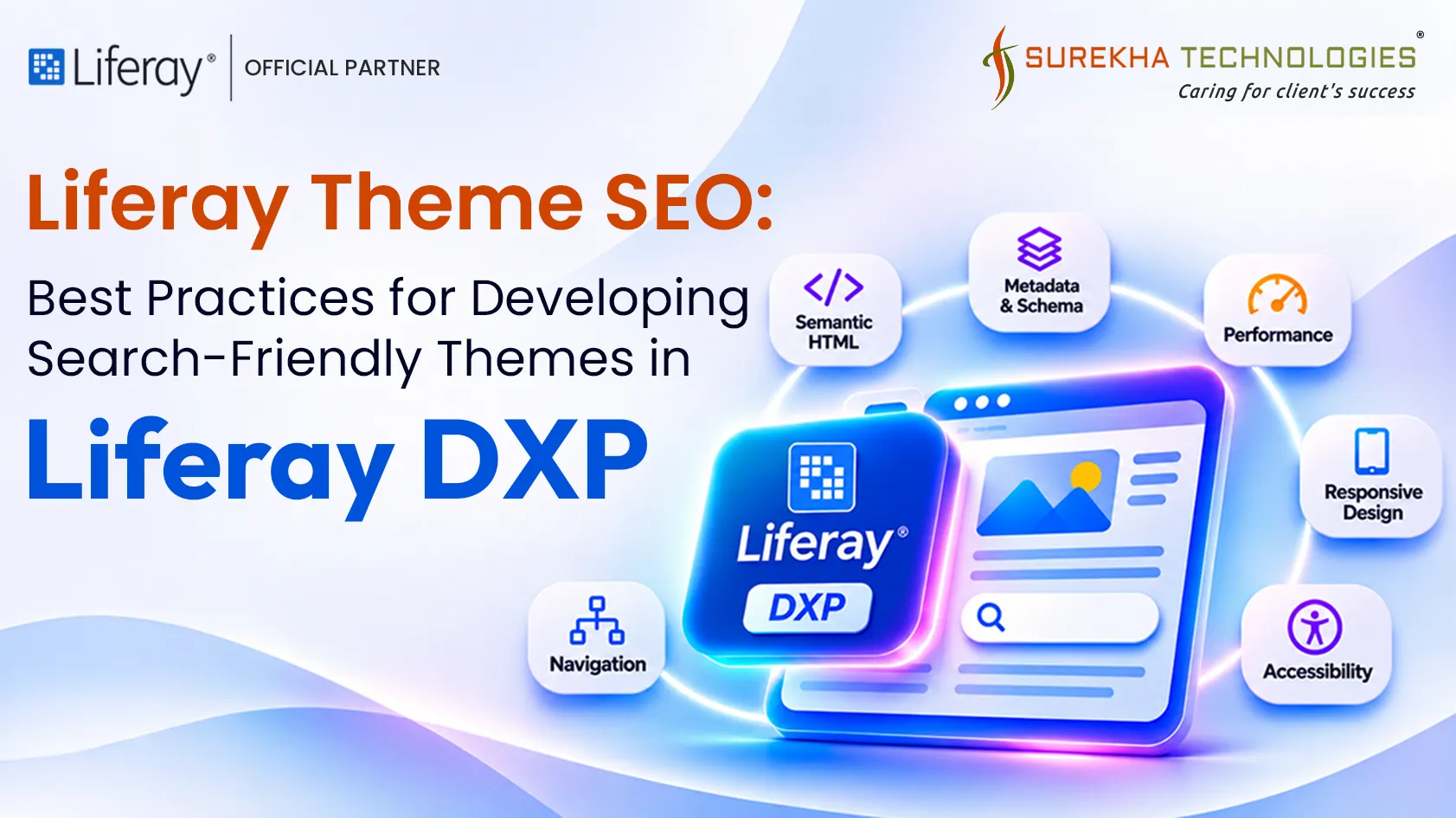
Search engine visibility depends not only on website content quality but also on how pages are structured, rendered, and accessed. For organizations using the Liferay Digital Experience Platform (DXP), theme development plays a key role in shaping these technical aspects, from HTML markup and metadata to navigation, page performance, and responsive layouts.
Liferay theme SEO focuses on addressing these elements during theme development, so search engines can discover and interpret website content effectively. A poorly implemented theme can cause slow-loading pages, broken links, duplicate metadata, and accessibility barriers that affect the overall user experience.
Following SEO best practices for Liferay themes helps developers address these technical considerations early, rather than treating them as afterthoughts. This blog explores practical approaches to theme architecture, performance optimization, structured data, and other essential aspects of building search-friendly Liferay websites.
Why SEO Matters for Liferay Themes
Search engine visibility depends on more than the content published on a website. The way pages are structured, rendered, and connected also influences how search engines discover and interpret information. In Liferay DXP, theme development plays a key role in shaping these elements, making SEO an essential consideration during development.
A well-developed theme supports search engine accessibility while providing a consistent visitor experience. Here are some key reasons why SEO matters in Liferay theme development.
- Better content discoverability: A clear HTML structure and logical heading hierarchy help search engines understand how page content is organized.
- Accurate page information: Properly implemented titles, meta descriptions, and canonical URLs help search engines interpret page content and URL relationships.
- Improved loading performance: Optimized CSS, JavaScript, and images help pages load efficiently and support a better user experience.
- Easier navigation: Well-structured menus, breadcrumbs, and internal links help visitors find relevant information and navigate between pages.
- Consistent mobile experience: Responsive layouts help ensure that website content remains accessible and usable across different screen sizes.
These considerations make SEO an integral part of Liferay theme development, rather than an activity reserved for after a website has been built.
Understanding Liferay DXP Theme Architecture
A Liferay DXP theme controls the visual presentation and structural markup of a website or portal. It brings together several components that determine how pages render, are styled, and appear to visitors. Understanding these components helps developers identify where SEO considerations fit into theme development.
The main components of a Liferay theme include:
- FreeMarker Templates: These templates generate HTML markup for pages and portlets, influencing how content is structured and presented.
- CSS Stylesheets: These control the visual appearance of pages and support responsive layouts across different devices.
- JavaScript Files: These provide client-side functionality and interactive features that influence how visitors engage with website elements.
- Theme Configuration: These settings define theme behavior, portal properties, and customization options.
- Static Assets: These include images, icons, and other media files used throughout the website interface.
Each component contributes to the overall presentation and behavior of a Liferay website. Understanding how they work together provides a foundation for making informed theme development decisions, including those related to page structure, accessibility, and performance.
Best Practices for Developing SEO-Friendly Liferay Themes
Developing SEO-friendly Liferay themes requires attention to the way website content is structured, presented, and delivered to visitors. Liferay theme SEO involves considering these technical elements during development, from semantic HTML and metadata to page performance and responsive design. The following Liferay SEO best practices cover six key areas developers should consider when building search-friendly themes.
1. Semantic HTML and Markup Structure
Semantic HTML defines the purpose and organization of different page elements, helping search engines and assistive technologies interpret the page structure. When developing Liferay themes, use appropriate HTML elements to represent each section.
- Use <header> for the portal masthead and top navigation.
- Wrap the main content in <main> to identify the primary content area.
- Use <article> for blog posts, news, and other independent content.
- Implement <aside> for sidebars and complementary content.
- Use <nav> navigation menus with appropriate ARIA labels.
- Include <footer> for site-wide information and links.
Maintain a logical heading hierarchy using H1, H2, and H3 elements. Each page should have a clear H1 representing its main topic, with H2 and H3 headings organizing supporting information and subtopics.
2. Metadata and Schema Implementation
Metadata provides information about a page, while structured data helps search engines interpret specific content details. Liferay themes should support appropriate metadata and structured data implementation according to the requirements of individual pages.
Important metadata elements include:
- Page titles: Clearly identify the subject of each page.
- Meta descriptions: Summarize page content for potential visitors in search results.
- Meta viewport: Supports responsive presentation across different devices.
- Canonical URLs: Identify the preferred URL when duplicate or similar URLs exist.
- Open Graph tags: Define how page information appears when shared on social platforms.
Liferay provides built-in variables for metadata implementation that themes should leverage where appropriate.
Structured data can also be implemented using JSON-LD for relevant content types, including articles, products, events, and organizations. The markup should reflect the actual content of each page and adapt to page-specific information where necessary.
3. Performance Optimization for Themes
Theme performance affects how efficiently visitors can access website content. Unnecessary resources and inefficient asset delivery can increase loading times, making performance optimization an important consideration in Liferay theme SEO.
Developers can apply the following techniques:
- CSS and JavaScript optimization: Minify and combine CSS files where appropriate to reduce HTTP requests. Defer non-critical JavaScript to improve page loading performance.
- Unused CSS removal: Use tools such as PurgeCSS to identify and eliminate unused CSS.
- CSS-in-JS considerations: Use CSS-in-JS selectively, as its implementation can affect performance.
- Compression and caching: Enable GZIP compression and browser caching to improve asset delivery.
- Content delivery networks: Consider CDNs for distributing static assets.
- Render-blocking resources: Review resources that delay page rendering and optimize their loading behavior.
Apply these techniques based on the website's requirements and test their impact to ensure performance improvements don't interfere with existing functionality.
4. Image Optimization for Search and Accessibility
Images contribute to a website's visual presentation, but their size and loading behavior can affect page performance. Image optimization should therefore be considered alongside accessibility and responsive design.
Follow these practices when developing Liferay themes:
- Compress images without compromising their required visual quality.
- Use modern formats such as WebP where appropriate.
- Implement responsive images using the srcset attribute to provide suitable image sizes for different display conditions.
- Apply lazy loading to images positioned below the fold to reduce the initial loading requirement.
- Include descriptive alt text for images to support accessibility and provide context for the content.
These practices help manage image delivery while supporting an accessible and consistent experience across devices.
5. Mobile Responsiveness and Core Web Vitals
Liferay themes should provide responsive layouts that adapt to different screen sizes. Navigation, text, images, and interactive elements should remain usable across desktop, tablet, and mobile devices.
Core Web Vitals provide metrics for evaluating important aspects of the page experience:
- Largest Contentful Paint (LCP): Measures how quickly the main content becomes visible. Optimizing hero images and prioritizing key content loading can help improve this metric.
- First Input Delay (FID): Measures the delay before a page responds to a user's first interaction. Minimizing JavaScript execution time is an important consideration for reducing interaction delays.
- Cumulative Layout Shift (CLS): Measures unexpected movement of page elements. Developers should work to prevent layout shifts as the page loads.
Evaluating these metrics alongside responsive design helps identify performance and usability issues that may affect the overall page experience.
6. Liferay Theme Best Practices
Beyond individual optimization techniques, several additional practices help establish a consistent SEO foundation across Liferay websites.
- Clean URL structure: Use Liferay's URL rewriting capabilities to create clean, descriptive URLs without unnecessary parameters or special characters.
- Breadcrumb navigation: Implement breadcrumb navigation with appropriate schema markup to help users and search engines understand the website's page hierarchy.
- Internal linking strategy: Design theme templates with appropriate internal linking patterns and ensure navigation elements support crawlability.
- Accessibility: Implement ARIA labels and roles where appropriate to improve accessibility across interface elements.
- Theme configuration: Document theme settings and establish SEO-friendly default configurations to support consistency across pages.
When planning theme architecture, configuration, and broader implementation requirements, organizations can also explore Liferay Consulting Services for guidance relevant to their Liferay environment.
Following these practices helps maintain consistency across theme implementations while keeping page structure, accessibility, and performance in focus.
Planning to improve your Liferay theme?
Our team can help you assess your development requirements and identify the right expertise for your project. Hire Our Liferay Developers
Common Mistakes to Avoid in Liferay Theme SEO
Even when a Liferay website has valuable content, theme-level issues can affect how search engines interpret its pages and how visitors interact with them. Avoiding these common mistakes helps developers apply Liferay theme SEO best practices consistently and build websites that are easier to navigate, access, and index.
Using Duplicate or Improper Heading Structures
Multiple H1 headings or inconsistent H1, H2, and H3 hierarchy can make page content harder to interpret. Use a clear heading structure that reflects the content organization and helps search engines understand each page’s main topic.
Missing Canonical Tags
Without correctly configured canonical URLs, similar or duplicate pages may create uncertainty about which version search engines should prioritize. Define canonical tags appropriately to indicate the preferred URL and help consolidate relevant indexing signals.
Broken Internal Links
Links that lead to missing pages interrupt navigation and make it harder for visitors to find relevant information. Regularly check internal links across Liferay pages, navigation menus, and content sections to identify broken destinations and maintain a consistent browsing experience.
Unoptimized Images and Missing Alt Text
Large image files can increase page loading time, while missing or vague alternative text can limit accessibility and provide less context for visual content. Compress images, use suitable modern formats, and write descriptive alt text where appropriate.
Poor Mobile Experience
A theme that does not adapt properly to smaller screens can make content difficult to read, and navigation harder to use. Ensure responsive layouts, readable text, accessible controls, and appropriately sized images across mobile devices, tablets, and desktops.
Practical Use Cases for SEO-Friendly Liferay Themes
Liferay websites serve different purposes, from enterprise portals to blogs and e-commerce platforms. Applying Liferay DXP SEO best practices helps developers meet the technical requirements of each use case, improve content discoverability, and give visitors a clear, accessible, and consistent browsing experience.
Use Case 1: Enterprise Content Portal with SEO-Optimized Navigation
An enterprise portal with thousands of pages needs a clear content hierarchy and accessible navigation. Semantic HTML, logical heading structures, and breadcrumb navigation with appropriate schema markup can help establish these relationships and support content discovery.
Use Case 2: Blog and Resource Platform
A content-focused website built on Liferay DXP can use appropriate Article structured data, optimized image handling, and efficient asset delivery. These measures support content accessibility and page performance. Search visibility and click-through rates still depend on several factors beyond theme implementation.
Use Case 3: E-Commerce Integration
For an e-commerce website using Liferay, product-page structure, relevant Product structured data, and performance-conscious interface design can support product information presentation. The theme should also support a usable checkout flow without unnecessary scripts or layout issues.
Use Case 4: Campaign Management and Landing Pages
Marketing teams use Liferay Content Marketing Platform (CMP) to plan campaigns, coordinate content creation, and manage approvals. When campaign assets are published as website landing pages, SEO-friendly themes help developers implement appropriate metadata, semantic HTML, and responsive layouts to support search visibility and visitor experience
In each case, theme decisions should reflect the website's content model, functionality, and technical requirements.
Security and SEO Compliance
Website security and search engine accessibility are essential considerations in Liferay theme development. Addressing security vulnerabilities, configuring crawler directives, and supporting XML sitemaps helps protect website integrity and enables search engines to discover and index relevant content effectively.
HTTPS Implementation
Secure connections protect data exchanged between users and the website. HTTPS is also a Google ranking signal, making it an important consideration for website security and search visibility.
Content Security Policy (CSP)
Implement a suitable Content Security Policy to help prevent malicious script injections that could compromise website security or affect the reliability of page content.
robots.txt Configuration
Configure the robots.txt file to guide search engine crawlers on which areas of the portal they can access and crawl. Ensure that important pages and resources are not unintentionally blocked.
XML Sitemap Support
Enable dynamic XML sitemap generation to help search engines discover the website’s indexable content. Keep sitemap entries relevant to the pages intended for search engine indexing.
A sound implementation of these measures requires careful attention to theme configuration, portal security, and search engine requirements. Liferay Development Services can support the technical development and configuration work involved in addressing these requirements.
Wrapping Up
Building a search-friendly website requires more than publishing relevant content. The underlying theme also influences how search engines interpret page structure, access content, and evaluate technical aspects such as metadata, performance, mobile responsiveness, and accessibility.
By applying Liferay theme SEO best practices during development, businesses can address technical issues early, improve content discoverability, and provide visitors with a consistent browsing experience. Regularly reviewing theme configurations, internal links, indexing directives, and performance helps maintain these standards as the website evolves.
Surekha Technologies brings Liferay development expertise to help businesses implement these practices through thoughtful theme development, technical configuration, and performance-focused improvements. Whether you are developing a new Liferay website or improving an existing DXP implementation, the right technical approach can establish a stronger foundation for search visibility.
Ready to strengthen your Liferay website’s search visibility?
Talk to us to discuss your requirements and explore the right approach for your Liferay DXP environment.
Frequently Asked Questions
What is Liferay theme development?
Liferay theme development involves customizing a website’s visual design, layout, styling, and presentation within Liferay DXP. It uses templates, CSS, JavaScript, and configuration settings to create consistent website experiences.
How does Liferay theme development affect SEO?
Liferay theme development affects SEO through HTML structure, heading hierarchy, metadata, page performance, responsive layouts, and navigation. Proper implementation helps search engines interpret page content, and visitors access information efficiently.
What are the key Liferay theme SEO best practices?
Key practices include semantic HTML, accurate metadata, canonical URLs, optimized CSS and JavaScript, compressed images, responsive layouts, accessible navigation, structured data, and properly configured XML sitemaps and crawler directives.
How can developers improve SEO performance in Liferay DXP?
Developers can improve Liferay DXP SEO by reducing render-blocking resources, optimizing images, enabling browser caching and compression, maintaining clean URLs, and addressing Core Web Vitals during theme development.
How should multilingual Liferay websites handle duplicate content?
Use appropriate canonical URLs and hreflang annotations to indicate preferred page versions and language or regional alternatives. Ensure that each localized page has accurate metadata and accessible, relevant content.
How does Surekha Technologies support Liferay theme development?
Surekha Technologies provides Liferay development expertise to help businesses implement theme requirements, configure portal components, improve page performance, and address technical considerations that support search engine accessibility and website usability.