Dealer Portal Solution for Order & Logistics Management – Auto Parts Company
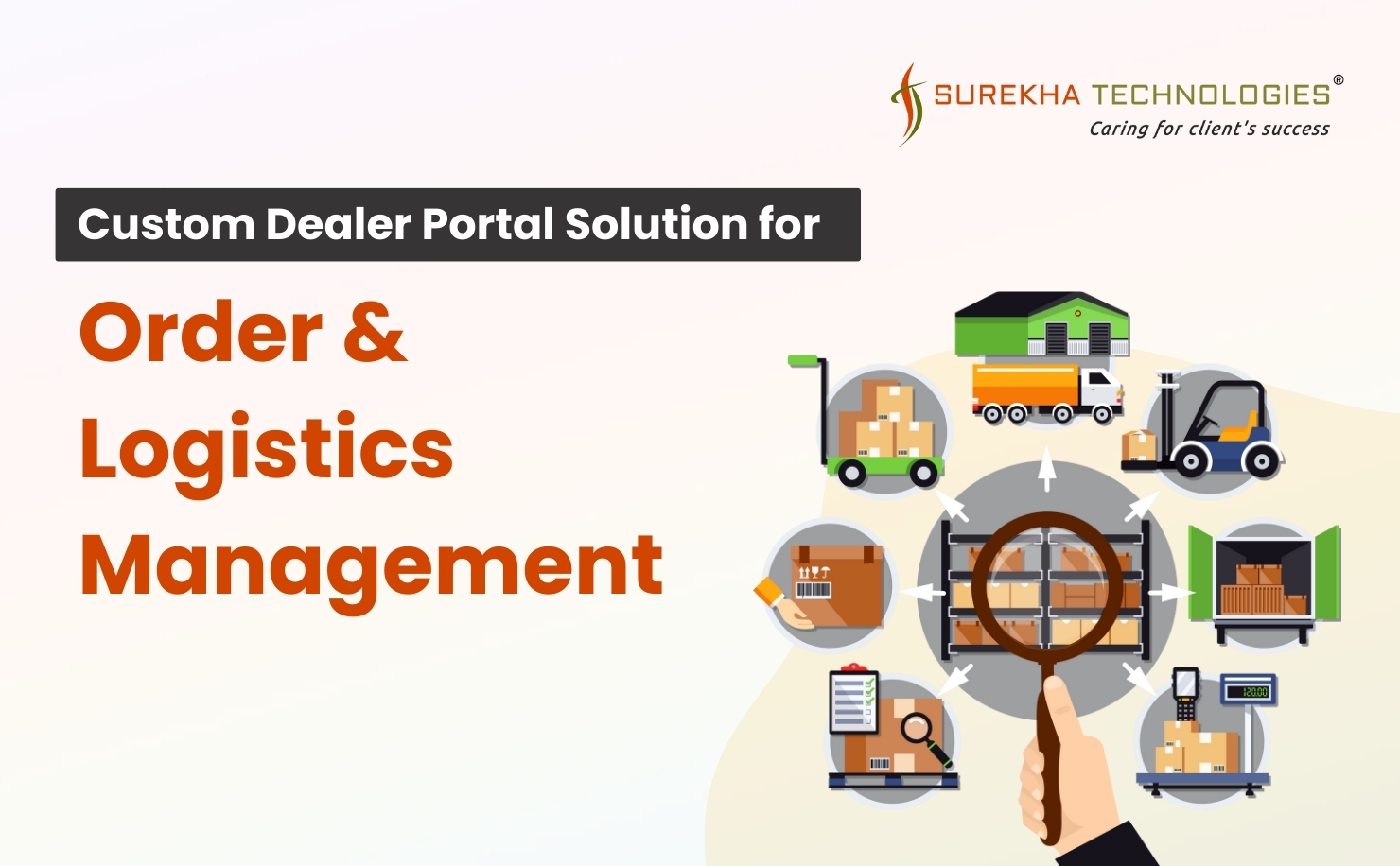
The solution reduced operational time by 80% through automated workflows, improved order accuracy with real-time checks, and helped logistics teams move faster. It is built using Next.js with Prisma as the ORM, leveraging the latest Prisma and Next.js Server Actions. The platform uses Microsoft Azure for document storage management and OpenTelemetry for log analytics.
The customer is a well-established US-based automotive parts distributor trusted by dealers across multiple regions. Their day-to-day operations revolve around keeping the right parts in stock, getting orders out on time, and coordinating smooth deliveries to dealers who rely on them. With warehouse teams, logistics staff, carrier partners, and dealers all working together, the customer needed a single, unified system that could bring everything into one place, making it easier for everyone to view inventory, place bulk orders, manage loads, and keep deliveries moving without delays.
Project Brief
Our client is a distributor of automotive parts, supporting a large network of dealers across different regions. The client is an expert in inventory management and logistics operations; they understand the challenges of dealers face, like placing bulk orders, tracking their orders, and ensuring timely delivery. Our client's goal was to modernize these workflows and create a digital platform where dealers can order, track, and improve their coordination across their entire supply chain.
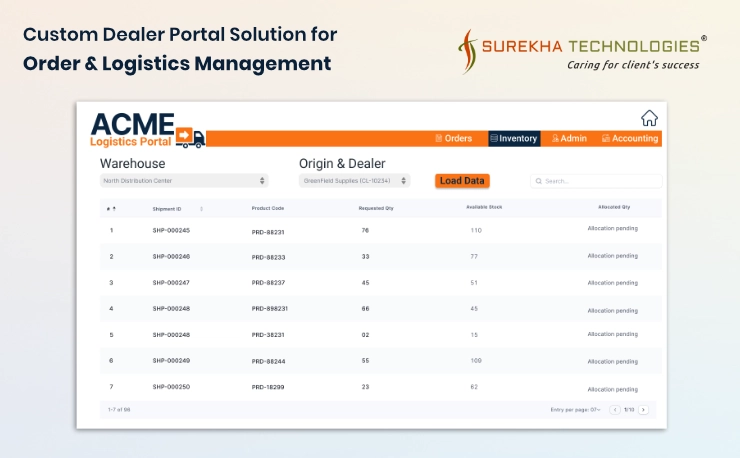
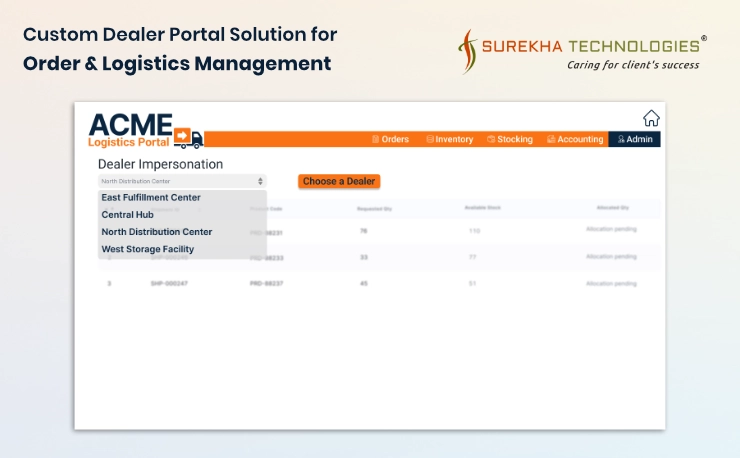
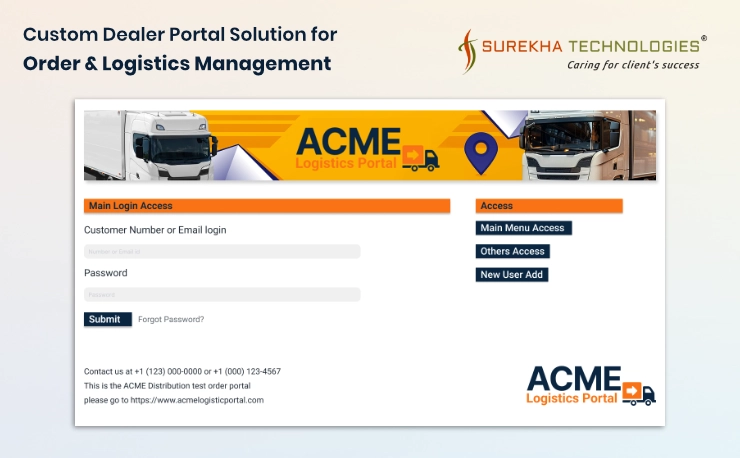
For this project, we partnered with them to build a comprehensive dealer portal that brings together inventory ordering, cart management, load building, and carrier bidding into a single, seamless system. The platform enables dealers to browse real-time inventory, place bulk orders, upload CSV files, and manage multiple cart types, all with intelligent validation to prevent errors. On the logistics side, we developed an end-to-end load management module that generates deliveries, tracks inventory consumption, coordinates carrier bidding, and supports approval of workflows.
Business Needs / Challenges
Technology Stack & Tools






Implementation Overview
Business Impact

80% Reduction in Operational Time
Automating load creation, inventory validation, bidding, and export workflows dramatically reduced manual steps for logistics teams and dealers.

Improved Order Accuracy
Real-time validation and structured carts reduced inventory discrepancies and prevented incorrect orders before submission.

Faster Logistics Turnaround - Icone
The Load Builder’s streamlined workflows allowed logistics teams to create, validate, and assign loads significantly faster.

Scalable Architecture
Utilizing Next.js and dynamic UI components means future enhancements will be easier to make, along with increases or changes to business needs can easily be accommodated.

Higher Transparency & Accountability
Centralized logs, role-based access, and bidding workflows created a fully traceable operational pipeline.

Increased System Reliability
Azure-based telemetry and storage improved uptime, observability, and data durability across the platform.
201, 3rd Eye II, Nr. Panchvati Circle, CG Road, Ahmedabad
+91 75748 05354

Happy to Connect, Let’s talk.
DXP | ERP | E-Commerce | AI-ML | DevOps | Bespoke Solutions
Trusted By
Happy to Connect, Let’s talk.
DXP | ERP | E-Commerce | AI-ML | DevOps | Bespoke Solutions
Trusted By
