Simplified Enterprise Architecture and Expanded Portal Capabilities Through Sitecore-to-Liferay Migration
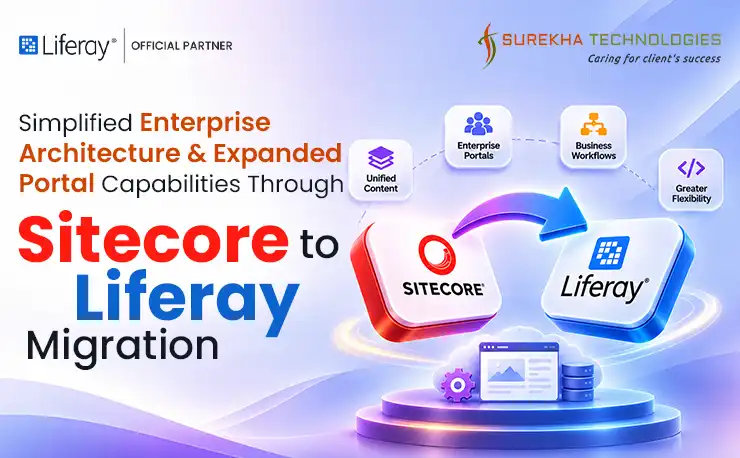
A large US-based enterprise with global operations wanted to reassess its digital experience platform as its requirements expanded beyond marketing websites and content management. Its existing Sitecore environment offered established content and marketing capabilities, but supporting a broader range of enterprise experiences required greater coordination between platform components, applications, and business processes.
The organization needed a robust, reliable platform that could bring content, user experiences, and business operations closer and align them. After thorough consultation with our experts and evaluating its long-term platform requirements, it selected Liferay DXP to replace its existing Sitecore environment and establish a common foundation for customer portals, partner experiences, and internal digital services.
Project Brief
The enterprise partnered with Surekha Technologies to plan its migration from Sitecore to Liferay DXP. The initiative focused on simplifying the digital platform architecture while expanding its ability to support complex enterprise relationships and multiple digital experiences.
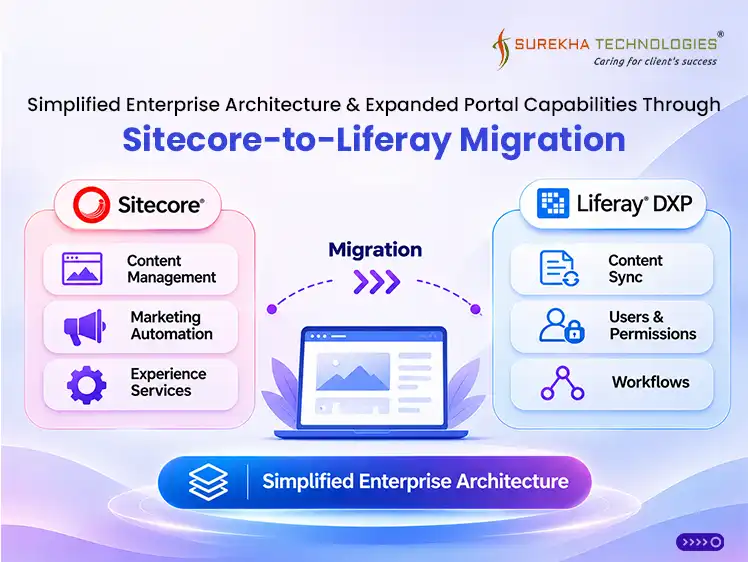
Rather than replicating the existing marketing-focused setup, the migration approach centered on Liferay's integrated content management, portal, workflow, and low-code capabilities. The goal was to reduce dependencies between separate platform components and give business and IT teams greater control over digital operations.
Business Needs & Challenges
Technology Stack & Tools


Implementation Overview
Business Impact/Results

Reduced Platform Coordination
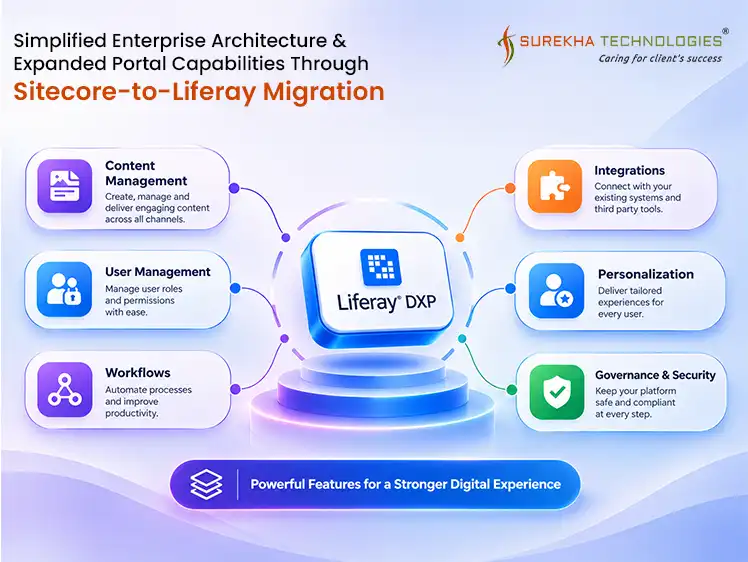
Moving to Liferay DXP established a more cohesive environment for managing content, users, and business processes. This reduced the architectural coordination required across separate platform products.

Expanded Enterprise Portal Capabilities
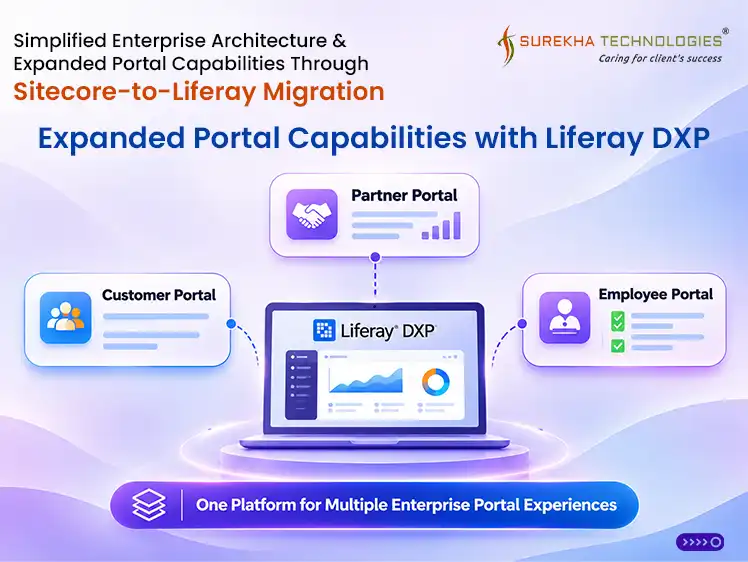
The organization gained a platform suited to supporting customer portals, partner experiences, and internal digital services. Its B2B capabilities provided greater flexibility in managing complex stakeholder relationships.

Enhanced Connection Between Content and Operations
Bringing workflow capabilities closer to content management created opportunities to connect digital activities with business execution, extending the platform's role beyond traditional content publishing.

Greater Business-User Independence
Low-code configuration capabilities provided business teams with more control over selected digital and operational changes, reducing their dependence on development teams for routine adjustments.

Flexibility for Future Innovation
Liferay's modular architecture and AI enablement approach provided a foundation for introducing additional digital capabilities as business requirements evolved, without making the organization dependent on a single approach to AI or platform development.
201, 3rd Eye II, Nr. Panchvati Circle, CG Road, Ahmedabad
+91 75748 05354

Happy to Connect, Let’s talk.
DXP | ERP | E-Commerce | AI-ML | DevOps | Bespoke Solutions
Trusted By
Happy to Connect, Let’s talk.
DXP | ERP | E-Commerce | AI-ML | DevOps | Bespoke Solutions
Trusted By
