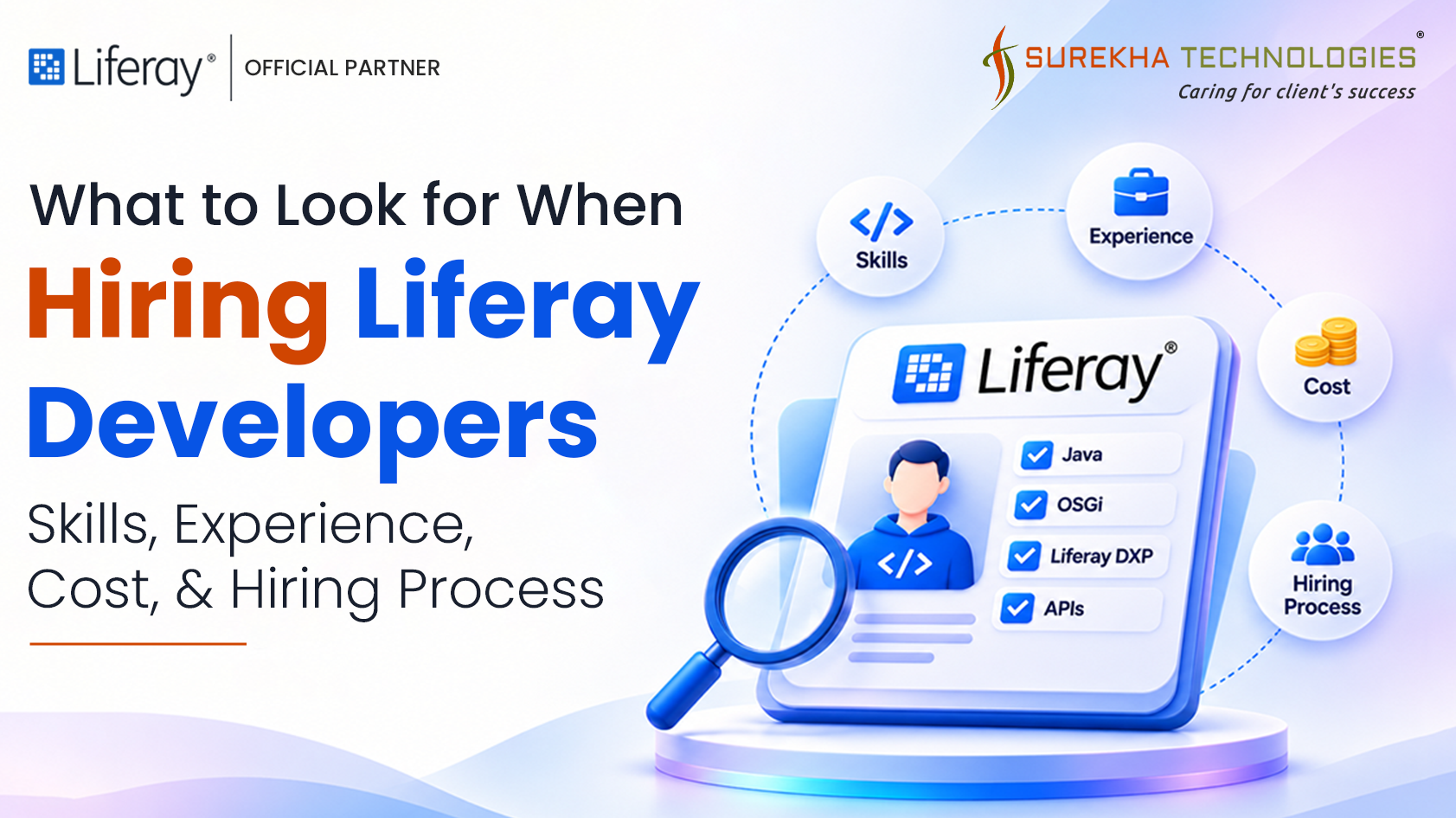
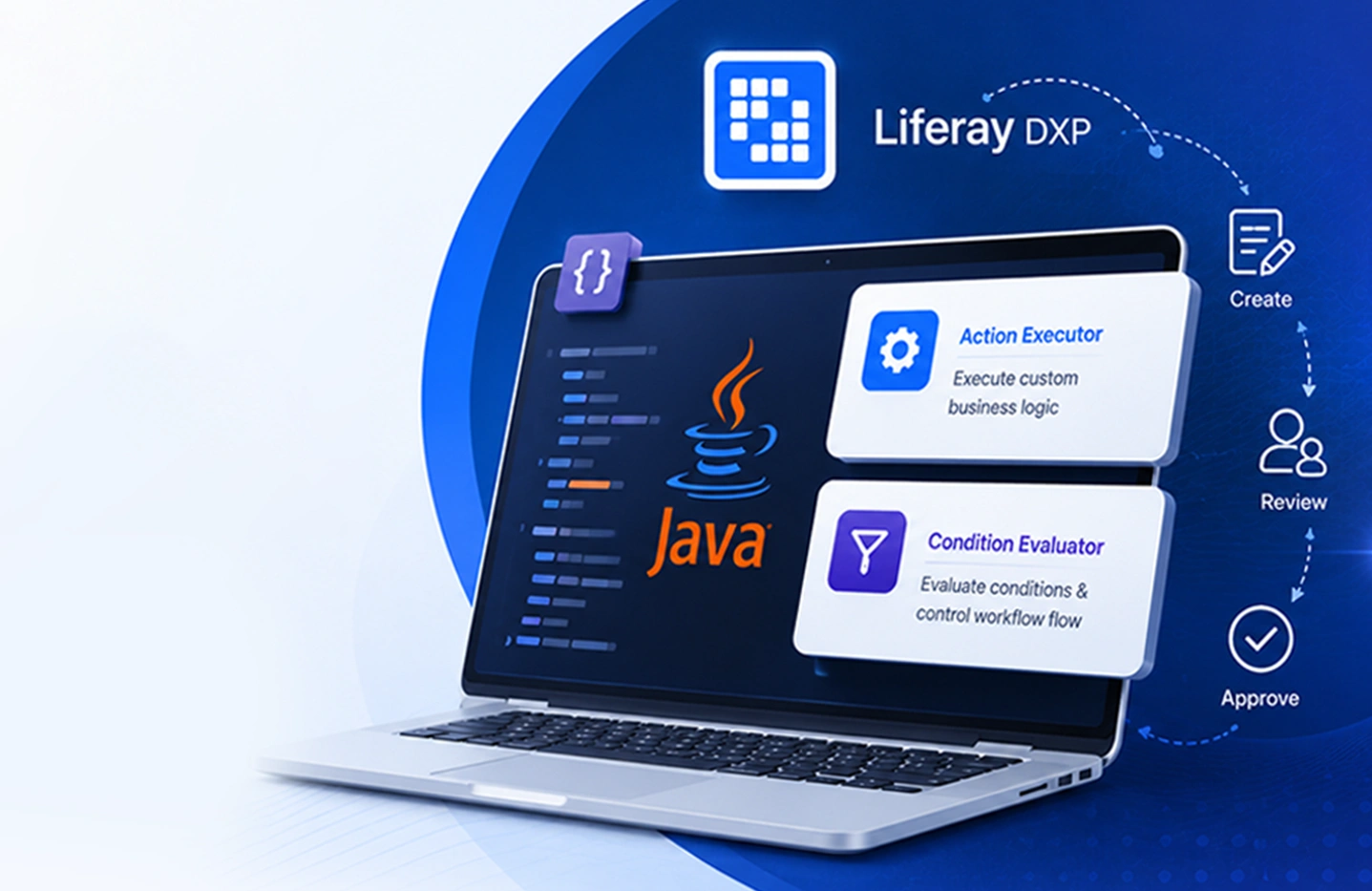
Hiring the right Liferay developer is a vital decision for businesses building, maintaining, or expanding their digital platforms. Liferay DXP supports complex enterprise requirements, from customer portals and employee intranets to business applications and system integrations. Delivering these solutions requires professionals who understand the platform's architecture and can translate business objectives into effective technical implementations.
However, evaluating candidates involves more than checking their Java proficiency or familiarity with Liferay tools. Businesses must consider hands-on Liferay DXP experience, technical specialization, project exposure, problem-solving capabilities, and their ability to work within existing enterprise environments. Understanding these factors helps decision-makers assess whether a developer's expertise aligns with their project requirements.
This guide explores what to look for when hiring Liferay developers, including essential technical skills, relevant experience, cost considerations, and the hiring process. It also outlines practical evaluation criteria to help businesses make informed hiring decisions and identify the right development expertise for their requirements.
Define Your Liferay Development Requirements Before Hiring
Before you hire Liferay developers, clearly define what your business expects from the engagement. Liferay projects can involve different levels of technical complexity, from developing a new enterprise portal to extending an existing Liferay DXP environment. Defining the scope early helps you identify the right technical expertise, estimate resource requirements, and evaluate candidates against actual project needs rather than general development skills.
Identify the Scope and Nature of Your Project
Start by determining the specific business requirements and the role Liferay DXP will play in addressing them. Consider whether your project involves:
- Enterprise portal development: Building customer portals, partner portals, employee intranets, or self-service platforms.
- Platform customization: Extending existing Liferay functionality through custom modules, portlets, themes, and application components.
- Liferay DXP implementation: Setting up the platform, configuring core capabilities, and developing features around business workflows.
- System integration: Connecting Liferay with ERP, CRM, HRMS, payment gateways, and other enterprise applications through APIs.
- Migration and upgrades: Moving from legacy portal platforms or upgrading existing Liferay environments to newer versions.
- Ongoing development and maintenance: Managing enhancements, resolving technical issues, and supporting evolving business requirements.
Each requirement calls for a different combination of Liferay development skills and project experience. For instance, a portal modernization initiative may require expertise in frontend architecture, platform migration, and system integration, whereas a custom application development project may demand stronger backend and module development capabilities.
Determine the Technical Expertise Your Project Requires
Once the project's scope is established, identify the technical competencies needed to execute it. Not every Liferay developer will have the same specialization or experience across the platform.
Consider the following areas when defining your requirements:
- Backend development: Java, Spring MVC, OSGi, Liferay APIs, and custom module development.
- Frontend development: JavaScript, HTML, CSS, React, Angular, and Liferay theme customization.
- Platform architecture: Liferay DXP configuration, content management, user permissions, and application architecture.
- Integration capabilities: REST APIs, third-party services, and enterprise system connectivity.
- Deployment and infrastructure: Application servers, database configuration, Docker, CI/CD pipelines, and cloud environments.
Your technical requirements should reflect the project's architecture, existing technology stack, and expected deliverables. This gives you a more precise basis for assessing Liferay developers and identifying gaps in their expertise.
Decide Between Project-Based and Long-Term Development Requirements
The duration and nature of the engagement also influence the type of developer or development team you should hire.
- Short-term or project-based requirements: Suitable for defined development assignments, specific customizations, platform upgrades, or integration work with clear deliverables.
- Long-term development requirements: Appropriate for businesses managing continuous platform development, multiple application enhancements, or ongoing Liferay DXP support.
- Dedicated development resources: Worth considering when your internal IT team needs additional technical capacity, consistent development support, or professionals who can work closely with existing teams.
Defining the engagement model in advance helps establish expectations around resource availability, responsibilities, communication, and project ownership.
A clear set of technical and business requirements makes the hiring process more focused. It lets decision-makers assess candidates against the actual demands of their Liferay projects and select developers whose expertise matches the intended scope of work.
Essential Technical Skills to Look for in a Liferay Developer
A qualified Liferay developer needs more than general programming knowledge. They should understand the platform's architecture, development frameworks, and integration capabilities to build applications that meet enterprise requirements. When businesses hire Liferay developers, evaluating the following six technical competencies can help determine whether their expertise aligns with the project's demands.
1. Java and Backend Development
Java forms the foundation of Liferay's backend architecture. Developers should have practical experience with:
- Java, Spring MVC, and OSGi framework.
- Liferay Service Builder and custom module development.
- RESTful APIs and backend service integration.
2. Liferay DXP Platform Expertise
Hands-on knowledge of Liferay DXP is essential for developing and extending portal functionality. Look for experience with portlets, modules, Liferay APIs, content management, user permissions, and platform customization. Familiarity with relevant Liferay versions is equally important when working with existing environments.
3. Frontend Development and UI Customization
Developers should be capable of creating functional and responsive portal interfaces using HTML, CSS, and JavaScript. Experience with React, Angular, Liferay themes, fragments, and frontend integration is particularly valuable for projects involving custom user experiences.
4. Database Management and Enterprise Integration
Liferay applications often exchange information with other enterprise systems. Developers should understand database operations and system connectivity, including:
- MySQL, PostgreSQL, and Oracle.
- SQL queries, data modeling, and database optimization.
- REST APIs and integrations with ERP, CRM, and HRMS applications.
5. Modern Development and Deployment Practices
Knowledge of contemporary development approaches helps developers work with evolving enterprise architectures. Relevant capabilities include Liferay Client Extensions, headless development using REST and GraphQL APIs, Docker-based deployment, and CI/CD tools such as Jenkins and GitLab CI.
6. Problem-Solving and Technical Decision-Making
Beyond programming proficiency, developers must be able to investigate application issues, troubleshoot integration failures, identify performance bottlenecks, and evaluate architectural trade-offs. Their ability to explain previous technical decisions and resolve complex development challenges provides valuable insight into their practical experience.
The right combination of these competencies depends on your application architecture, development objectives, and existing technology environment. Evaluating them together helps businesses identify professionals who can contribute beyond individual coding assignments and support broader enterprise development requirements. Explore our Liferay Development Services to understand the range of development capabilities available for enterprise platforms.
Looking to Hire Experienced Liferay Developers?
Get access to Liferay development expertise for enterprise portals, custom applications, platform extensions, and integrations.
Contact Us
Evaluate Liferay Development Experience and Project Expertise
Technical knowledge establishes a developer's capabilities, but practical project experience reveals how effectively they can apply that knowledge in an enterprise environment. When you hire Liferay developers, look beyond how many years they have worked with the platform. Evaluate the complexity of their previous assignments, the responsibilities they handled, and their ability to address challenges like those in your project.
Consider these aspects when assessing their experience:
- Relevant Liferay DXP projects: Review their involvement in enterprise portal development, custom application development, platform modernization, and complex implementations.
- Version-specific experience: Check whether they have worked with the Liferay versions relevant to your environment, particularly when planning upgrades, migrations, or ongoing development.
- Industry and domain exposure: Experience in sectors such as BFSI, manufacturing, government, and automotive can be valuable when projects involve specialized workflows, security requirements, or industry-specific integrations.
- Integration and customization expertise: Assess their experience connecting Liferay with ERP, CRM, HRMS, and other enterprise applications, as well as developing custom platform functionality.
- Problem-solving experience: Ask how they handle performance issues, technical dependencies, application limitations, and complex implementation requirements.
How to Assess a Liferay Developer's Portfolio
A portfolio provides useful evidence of a developer's practical capabilities, but reviewing project names alone is not sufficient. Examine the technical contribution behind each assignment.
Ask candidates to explain the business requirements, their individual responsibilities, technologies used, implementation approach, and challenges encountered. For team-based projects, distinguish between the work they personally handled and the broader team's contribution.
You can also use a technical discussion or a project-based assessment to understand how they approach real development scenarios. This helps establish whether their experience aligns with your architecture, project complexity, and delivery expectations.
Ultimately, prioritize relevant implementation experience and the ability to make sound technical decisions over years of experience alone. A developer who has successfully handled requirements like yours is often better positioned to contribute effectively from the outset.
Understand the Cost of Hiring Liferay Developers
The cost of hiring Liferay developers depends on several factors beyond their hourly or monthly rates. Businesses should evaluate overall project requirements, technical complexity, and required expertise before setting their development budget.
Some of the key cost considerations include:
- Developer experience and specialization: Professionals with extensive Liferay DXP experience, advanced Java skills, and enterprise architecture knowledge may command higher rates.
- Project scope and complexity: Custom portal development, complex integrations, platform modernization, and migration projects require different levels of effort and technical expertise.
- Engagement duration: Short-term assignments, dedicated development resources, and long-term engagements can involve different pricing arrangements.
- Technology and integration requirements: Projects involving third-party applications, legacy systems, or Liferay Integration Services may require additional development and testing efforts.
- Engagement and pricing models: Hourly, monthly, and fixed-price arrangements offer different approaches to budgeting and resource allocation.
Rather than comparing developer rates alone, assess the expected deliverables, resource commitment, and overall project value. A clear scope and realistic budget help businesses choose the right development expertise while maintaining financial control throughout the engagement.
Follow a Structured Process for Hiring Liferay Developers
Once your technical requirements, project scope, and budget are established, the next step is to identify and evaluate suitable development professionals. A structured hiring process helps businesses assess technical capabilities, verify relevant experience, and establish clear expectations before committing to an engagement.
Here are six steps to consider when you hire Liferay developers:
Step 1: Define the Role and Project Expectations
Document the technical responsibilities, expected deliverables, project duration, and level of involvement required. Specify whether you need an individual developer, a dedicated team, or additional development capacity for your existing IT department.
Step 2: Identify Suitable Candidates or Development Partners
Explore professional networks, technical communities, referrals, and specialized development companies. Shortlist candidates whose experience aligns with your Liferay DXP requirements rather than relying exclusively on general software development profiles.
Step 3: Review Technical Profiles and Previous Projects
Examine their experience with Java, OSGi, Liferay APIs, custom application development, and enterprise integrations. Review relevant project examples to understand the complexity of their work and their individual contributions.
Step 4: Conduct Technical Interviews and Assessments
Use technical discussions or practical assessments to evaluate platform knowledge, coding practices, debugging capabilities, and architectural understanding. Include scenarios relevant to your project to assess how candidates approach real development challenges.
Step 5: Discuss Engagement Models and Commercial Terms
Clarify developer availability, communication arrangements, resource allocation, pricing, and project timelines. Evaluate whether the proposed Liferay development team can meet your delivery expectations and provide the required level of technical involvement.
Step 6: Finalize Responsibilities and Project Agreements
Before beginning development, establish the scope of work, milestones, deliverables, reporting structure, code ownership, documentation requirements, and support responsibilities. Clearly documented expectations help both parties maintain accountability throughout the engagement.
Following these steps gives businesses a consistent framework for evaluating candidates and selecting Liferay development professionals who match their technical requirements, project objectives, and operational expectations.
Common Mistakes to Avoid When Hiring Liferay Developers
Hiring the wrong development resource can cause implementation delays, technical rework, unexpected costs, and maintenance challenges for enterprise applications. Even with clearly defined requirements, businesses can overlook important evaluation criteria when selecting candidates. Avoiding the following mistakes can help make the hiring decision more informed.
1. Prioritizing Java Experience Over Liferay Expertise
Strong Java skills are important, but they do not automatically translate into Liferay proficiency. Developers must also understand the platform's architecture, APIs, modules, and extension mechanisms. Evaluate their hands-on Liferay experience alongside their general programming capabilities.
2. Overlooking Relevant Project Experience
Years of experience alone don't show whether a developer can handle your requirements. Review previous assignments, project complexity, individual contributions, and familiarity with similar enterprise environments before deciding.
3. Ignoring Integration and Customization Capabilities
Enterprise Liferay projects frequently involve external applications, custom workflows, and complex data exchanges. Overlooking a developer's integration experience can create difficulties when connecting the portal with existing business systems.
4. Making Hiring Decisions Based Solely on Cost
Choosing the lowest-priced resource may seem financially attractive, but insufficient technical expertise can lead to extra development effort and maintenance costs. Consider overall project value, expected deliverables, and technical suitability rather than comparing rates alone.
5. Skipping Technical Assessments
Relying exclusively on resumes, certifications, or initial interviews can leave gaps in your understanding of a candidate's practical capabilities. Include technical discussions, project reviews, or relevant problem-solving exercises before finalizing your selection.
6. Leaving Project Expectations Undefined
Unclear responsibilities, timelines, deliverables, and communication arrangements can create disagreements during development. Establish the scope of work, ownership expectations, reporting structure, and support requirements before the engagement begins.
Avoiding these mistakes helps businesses evaluate candidates more objectively and select Liferay developers who are better aligned with their technical requirements and long-term development objectives.
Find the Right Liferay Development Expertise with Surekha Technologies
Choosing the right development professionals requires a clear understanding of your technical requirements, project complexity, and long-term objectives. When you hire Liferay developers, prioritize hands-on platform experience, strong engineering capabilities, and the ability to work within your enterprise environment.
Surekha Technologies, an official Liferay Partner, brings extensive experience in delivering enterprise Liferay solutions across BFSI, government, manufacturing, and automotive industries. Our capabilities include portal development, platform customization, system integration, migration, and upgrades. Whether you need individual development resources or a dedicated Liferay development team, we can help you identify an engagement approach aligned with your project requirements.
Ready to Hire Experienced Liferay Developers?
Bring your next Liferay project closer to reality with the right technical expertise. Discuss your requirements with our team and explore how Surekha Technologies can support your development goals.
Connect with Our Liferay Experts Today
Frequently Asked Questions About Hiring Liferay Developers
1. What skills should you look for when hiring a Liferay developer?
Look for proficiency in Java, OSGi, Liferay DXP architecture, front-end technologies, REST APIs, and database management. Practical experience with enterprise portals, custom modules, and system integrations is equally important.
2. How much does it cost to hire a Liferay developer?
Hiring costs depend on developer experience, technical specialization, project complexity, engagement duration, and location. Hourly, monthly, and fixed-price models offer different budgeting options based on your development requirements.
3. How many years of experience should a Liferay developer have?
The required experience depends on your project's scope. Complex enterprise implementations generally require developers with substantial hands-on Liferay experience, while smaller customization assignments may need less extensive platform exposure.
4. Can businesses hire dedicated Liferay developers for long-term projects?
Yes. Businesses can hire dedicated Liferay developers for ongoing development, platform maintenance, application enhancements, and system integrations. This engagement model provides consistent technical resources aligned with long-term development requirements.
5. What is the difference between a Java developer and a Liferay developer?
A Java developer specializes in Java-based application development, whereas a Liferay developer combines Java expertise with knowledge of Liferay DXP architecture, APIs, modules, portal customization, and platform-specific development practices.
6. Can Liferay developers integrate the platform with existing enterprise applications?
Yes. Liferay developers can connect the platform with ERP, CRM, HRMS, payment systems, and other enterprise applications using APIs and appropriate integration methods, depending on the technical requirements of each system.
7. Why choose Surekha Technologies to hire Liferay developers?
Surekha Technologies is an official Liferay Partner with experience delivering enterprise Liferay solutions. Businesses can engage its developers for portal development, customization, integrations, migrations, upgrades, and ongoing support.