Odoo is one of the most widely adopted open-source ERP platforms in the world. It helps businesses manage sales, inventory, accounting, manufacturing, HR, and more in one integrated system.
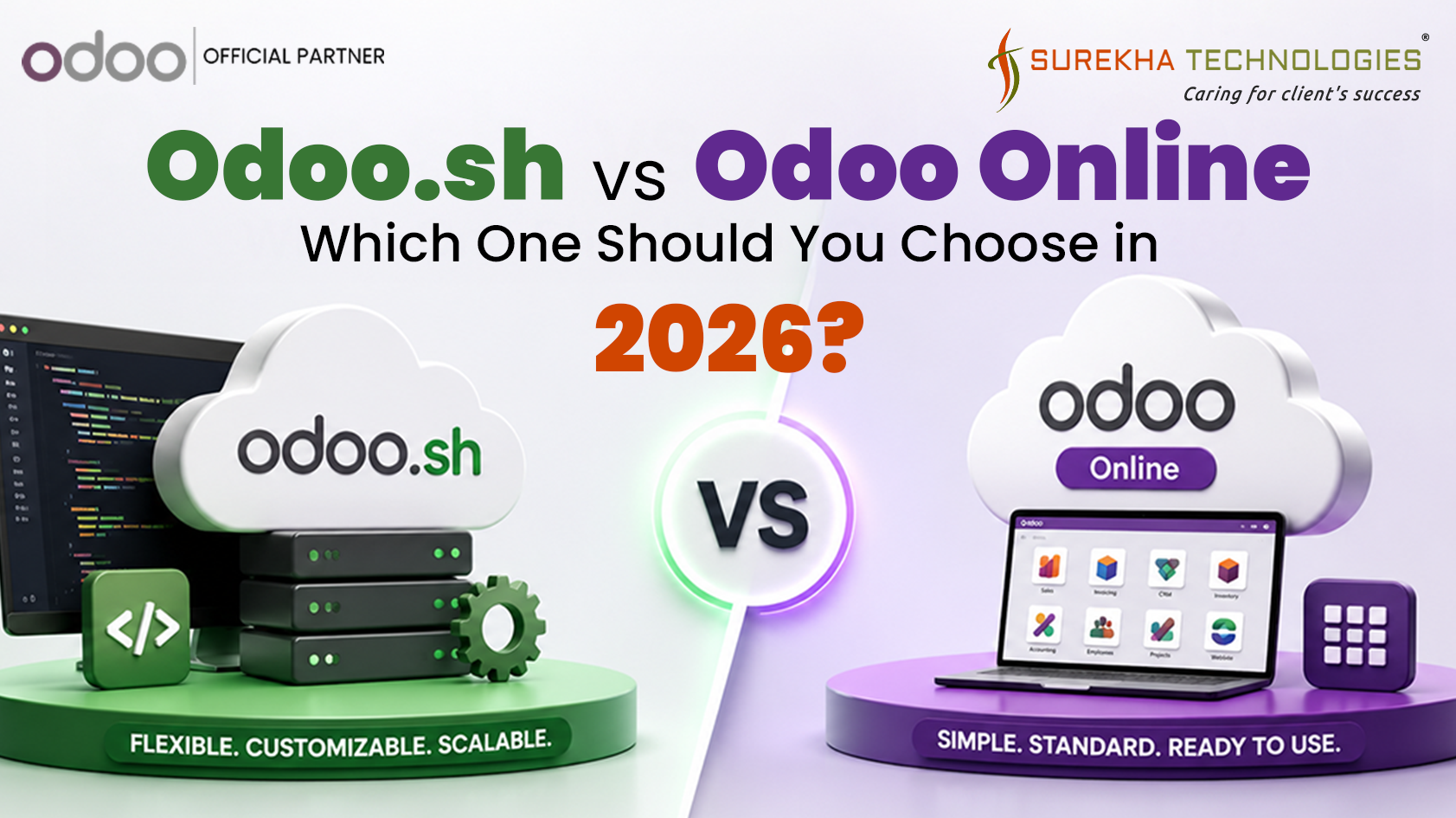
When implementing Odoo Enterprise, one of the first decisions you must make is choosing the right hosting model. The most common comparison businesses evaluate is Odoo.sh vs Odoo Online.
While both are cloud-based and managed by Odoo, they are built for different business needs. This detailed Odoo hosting comparison explains the differences in flexibility, deployment, pricing structure, and scalability so you can make the right decision in 2026.
Understanding Odoo Online (SaaS Model)
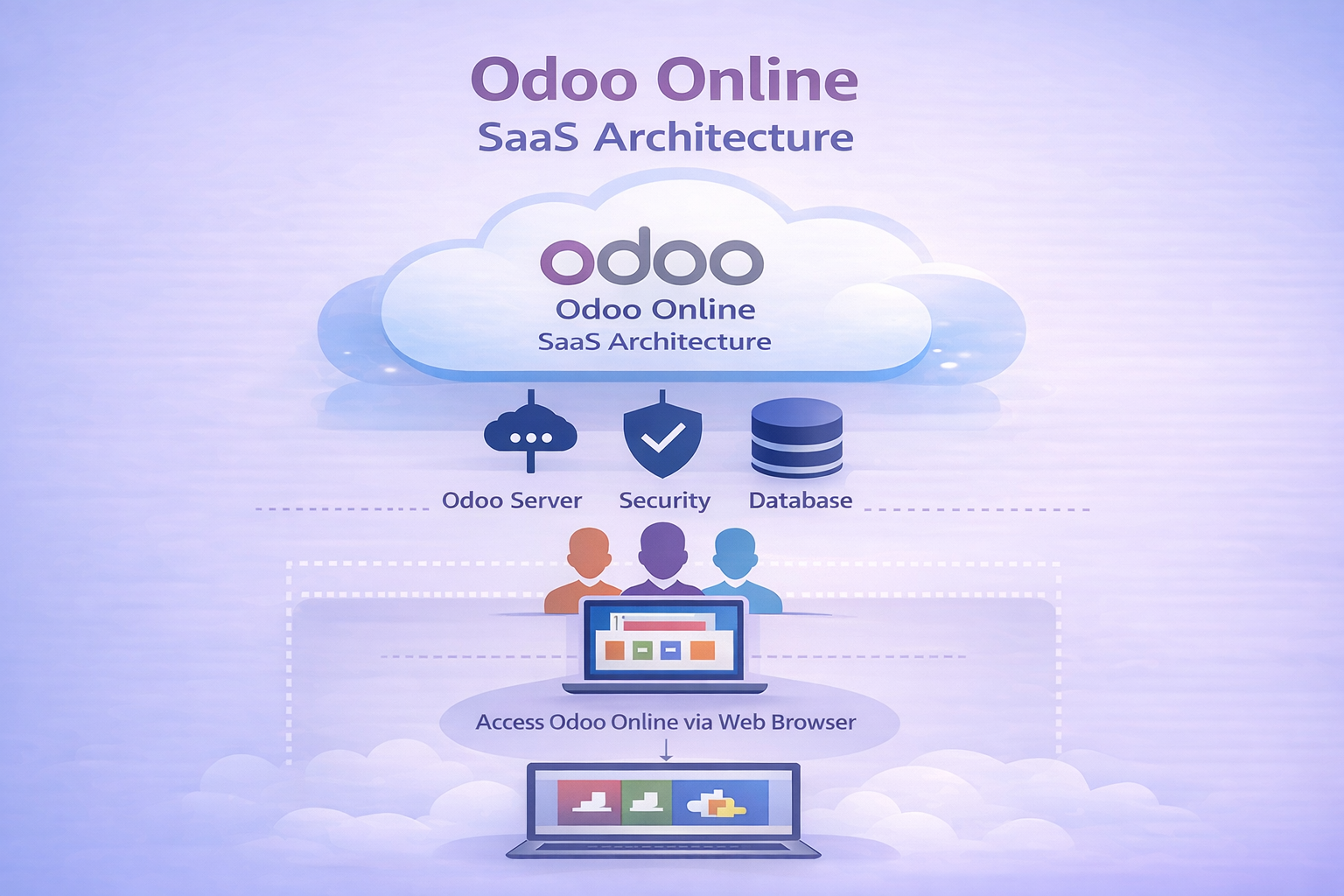
Odoo Online is a SaaS platform. SaaS stands for Software as a Service. This means Odoo hosts and manages the entire infrastructure, and businesses access the software through a web browser.
With Odoo Online:
- You do not manage servers
- You do not handle infrastructure
- You do not manage backups
- You do not perform manual upgrades
Everything is handled by Odoo.
The setup process is straightforward. A business can go to Odoo’s website, select required applications, choose the number of users, subscribe, and start using the system within minutes.
This simplicity makes Odoo Online attractive for:
- Startups
- Small businesses
- Companies with standard workflows
- Organizations without internal IT teams
However, the key limitation is customization. Odoo Online does not allow installation of custom modules. Businesses can use standard apps and make limited changes through Odoo Studio, but deeper backend development is not supported.
For companies with unique workflows, this can become restrictive over time.
What Is Odoo.sh?
Odoo.sh is a managed cloud platform designed for businesses that require flexibility and customization.
It is part of the Odoo Enterprise ecosystem but offers structured development capabilities.
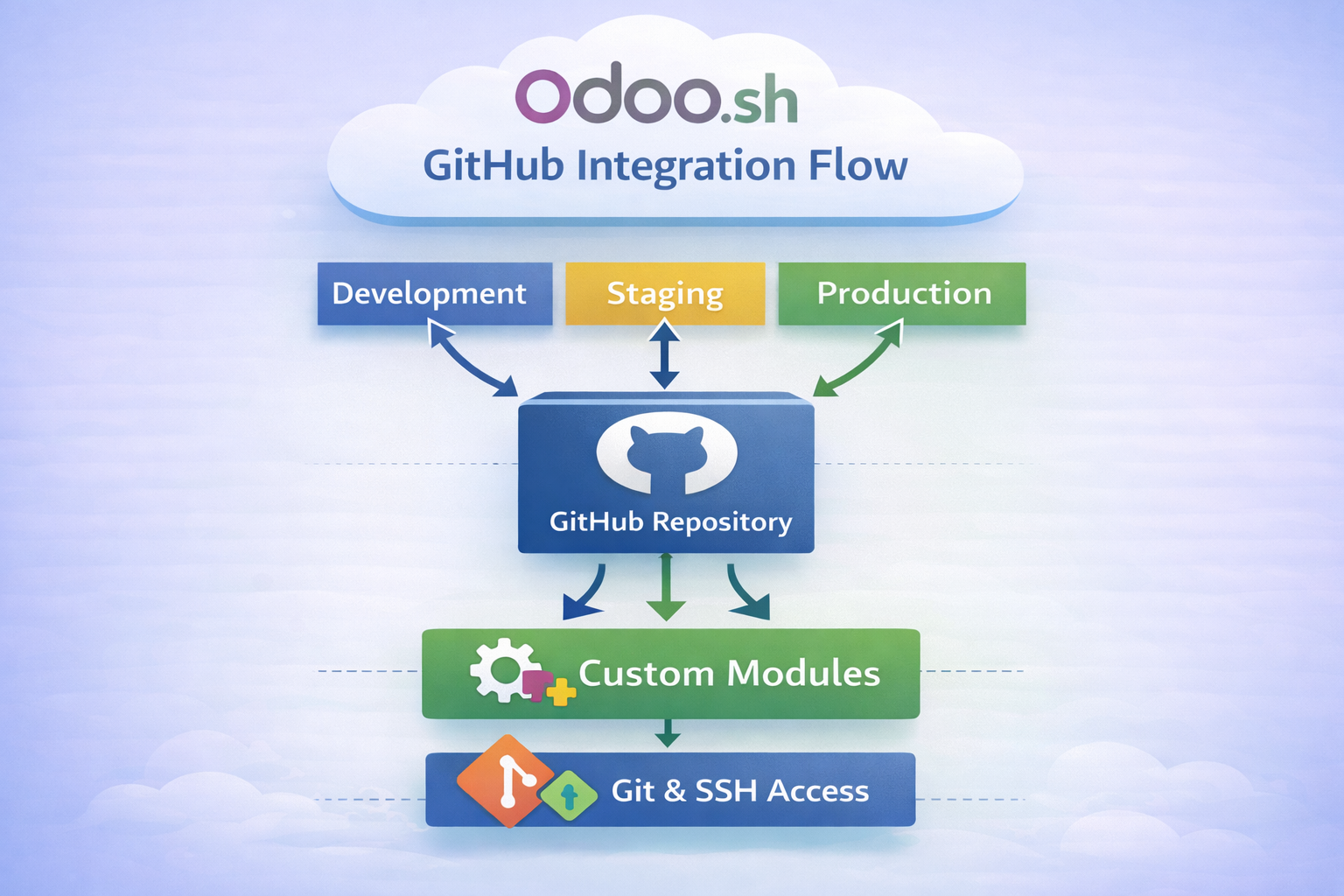
Unlike Odoo Online, Odoo.sh integrates directly with GitHub. This allows developers to:
- Clone repositories
- Create feature branches
- Merge changes
- Deploy custom modules
- Test updates in staging environments
This Git-based workflow makes Odoo.sh suitable for businesses that need structured development and version control.
The deployment process includes connecting a GitHub repository, selecting hosting location, choosing the Odoo version, and activating the subscription. Once configured, Odoo.sh automatically builds and deploys the environment.
This setup is particularly valuable for:
- Manufacturing companies
- Businesses with complex workflows
- Companies requiring third-party integrations
- Organizations planning long-term ERP scaling
Odoo.sh vs Odoo Online: Core Differences
1. Customization Capability
Odoo Online does not support custom modules. You can configure apps but cannot modify core logic or install third-party add-ons that require server access.
Odoo.sh fully supports custom module installation. Businesses can build industry-specific functionality, modify workflows, and integrate external systems.
For manufacturing businesses running complex MRP processes, this flexibility is often essential.
2. Development Environment
Odoo Online does not provide development or staging environments.
Odoo.sh offers separate environments for development, staging, and production. This allows safe testing before deploying changes live.
For growing enterprises in the USA or EU, this controlled deployment reduces operational risk.
3. Upgrade Management
Odoo releases new versions annually.
In Odoo Online, upgrades are managed automatically by Odoo. Businesses have limited control over timing.
In Odoo.sh, upgrades can be tested in staging before moving to production. This is critical if custom modules are involved.
4. Hosting and Infrastructure
Both platforms are hosted by Odoo. However, Odoo.sh allows businesses to select hosting regions, which can be important for data compliance in the EU or performance optimization in the USA and India.
5. Pricing Structure
Odoo Online pricing is subscription-based per user and app. Hosting is included.
Odoo.sh includes subscription costs plus hosting resources based on storage and build requirements.
While Odoo Online may appear cheaper initially, businesses expecting customization should consider long-term scalability costs.
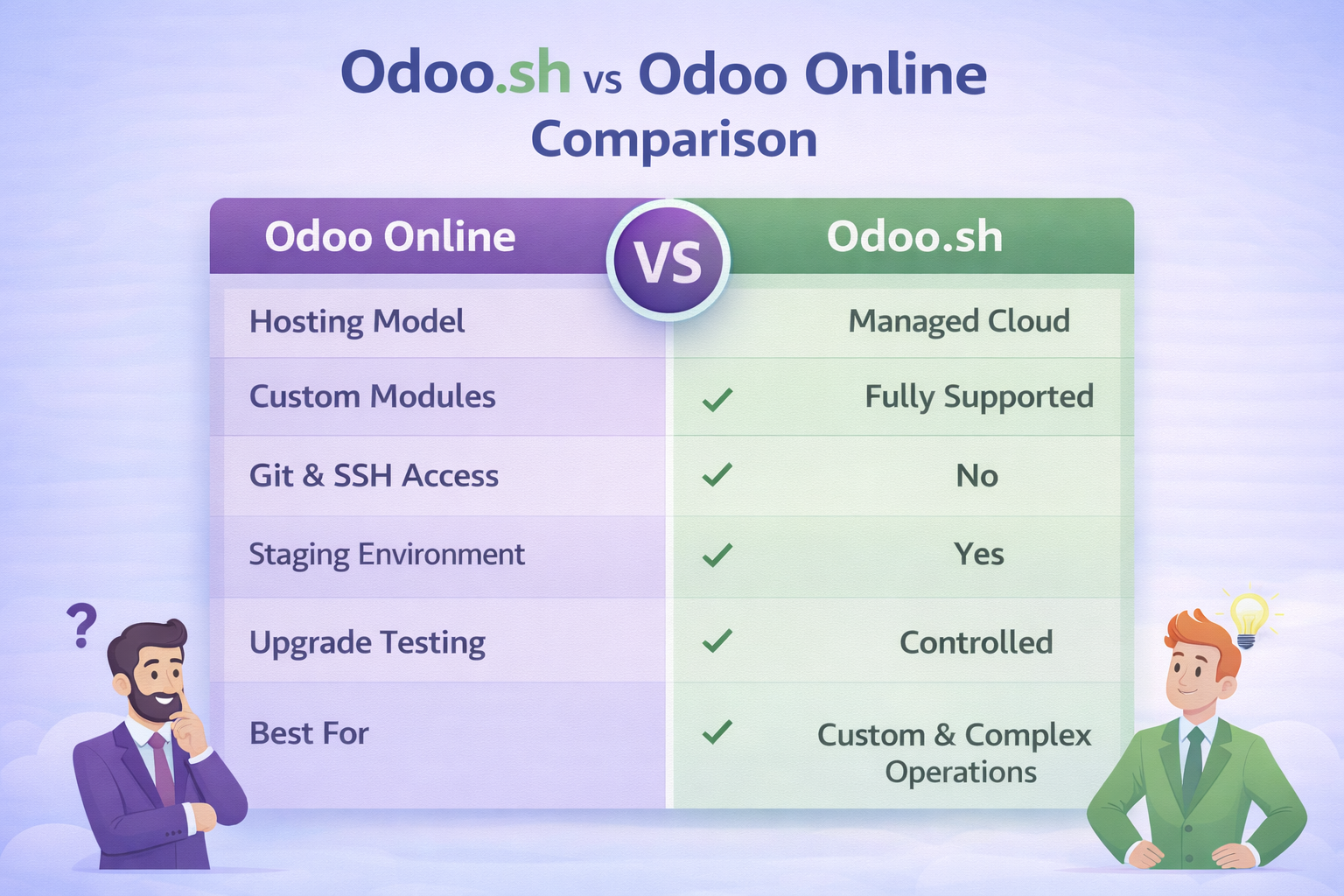
Odoo Hosting Comparison Table
| Feature | Odoo Online | Odoo.sh |
| Hosting Model | SaaS | Managed Cloud Platform |
| Custom Modules | Not Supported | Fully Supported |
| GitHub Integration | No | Yes |
| Staging Environment | No | Yes |
| Upgrade Testing | Automatic | Controlled |
| Technical Access | Limited | Structured Access |
| Best For | Standard Processes | Custom & Complex Operations |
Which Is Better for Manufacturing Businesses?
Manufacturing companies often require:
- Custom production workflows
- Multi-level Bills of Materials
- Routing customization
- Quality control automation
- Third-party integrations
Odoo Online may work for small manufacturers with simple operations.
However, once production processes become layered or require automation, Odoo.sh becomes the more sustainable option.
In regions like the EU where compliance and data governance matter, upgrade control and hosting region selection also become important factors.
Regional Perspective: EU, USA, and India
In the EU, businesses often prioritize compliance, data protection, and structured upgrade control. Odoo.sh offers greater flexibility for controlled deployments.
In the USA, companies frequently require integration with CRM platforms, logistics tools, and advanced analytics. Odoo.sh supports such integrations more effectively.
In India, many businesses begin with Odoo Online for cost efficiency but transition to Odoo.sh as they scale.
The right choice depends more on business complexity than geography, but regional regulations and growth patterns influence decision-making.
When Should You Choose Odoo Online?
Odoo Online is suitable when:
- Your processes align with standard Odoo workflows.
- You do not require custom modules.
- You want fast deployment with minimal technical involvement.
- You prefer predictable subscription pricing.
When Should You Choose Odoo.sh?
Odoo.sh is the better choice when:
- You require custom development.
- You need structured testing environments.
- You plan long-term ERP scaling.
- You operate in manufacturing or complex industries.
Why Expert Guidance Matters
Choosing between Odoo.sh and Odoo Online is not just about features. It is about aligning ERP architecture with long-term business goals.
With over 15+ years of experience in ERP consulting and digital transformation, SurekhaTech has helped organizations across manufacturing, distribution, and service industries implement the right Odoo hosting strategy.
Our Certified Odoo Developers evaluate operational complexity before recommending a hosting model. For businesses choosing Odoo Online, we focus on maximizing standard functionality. For organizations selecting Odoo.sh, we implement structured Git workflows, safe deployment practices, and scalable customization frameworks.
This balanced approach ensures your ERP system supports growth rather than limiting it.
Frequently Asked Questions: Odoo.sh vs Odoo Online
1. What is the main difference between Odoo.sh and Odoo Online?
Odoo Online is a fully managed SaaS solution with no custom module support. Odoo.sh allows custom development, code access, and staging environments.
2. Can I install custom modules on Odoo Online?
No. Odoo Online does not allow custom modules. For customization, you need Odoo.sh.
3. Is Odoo.sh more expensive than Odoo Online?
Yes, in most cases. Odoo.sh includes hosting resources and development flexibility, which increases overall cost.
4. Which option is better for manufacturing businesses?
Odoo.sh is generally better for manufacturers that need custom workflows, integrations, or advanced MRP configurations.
5. Is Odoo Online suitable for growing companies?
Yes, if workflows are standard. If customization is expected in the future, Odoo.sh may be a better long-term choice.